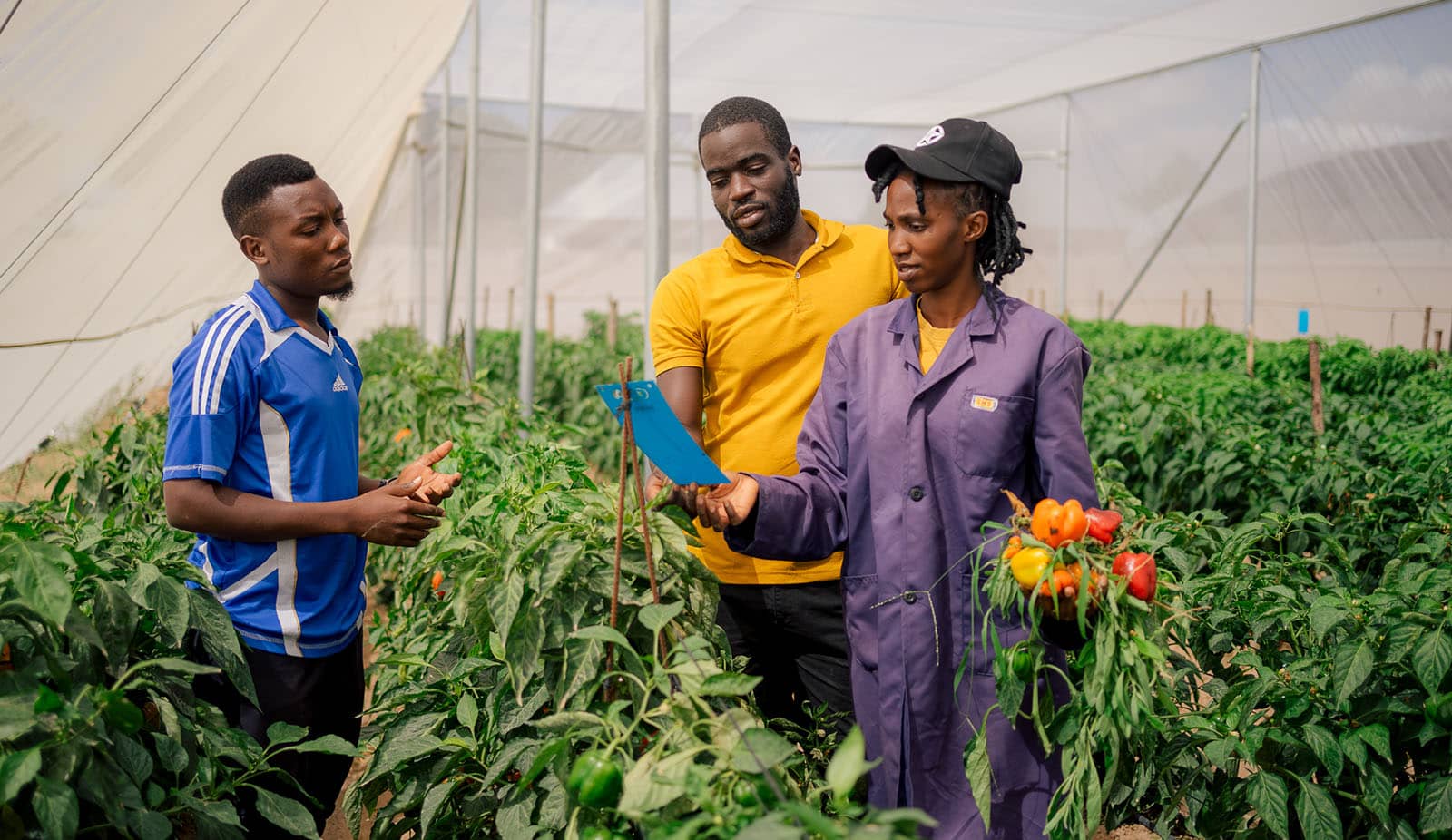
The 2026 Global Hunger Index highlights how sociopolitical, ecological, and economic shocks intersect, undermining the resilience of food systems within and across borders, while rising food insecurity can in turn deepen instability. The following recommendations call on governments, donors, and other actors to adopt a people-centered, rights-based understanding of security and systematically embed food and nutrition security in resilience, peacebuilding, and security policies grounded in the right to adequate food.
-
Embed food and nutrition security into security policies
Food and nutrition security must be a cross-cutting policy priority within a people-centered, rights-based understanding of security, requiring inter-ministerial coordination, inclusive decision-making, and sustained public investment.
-
Governments must integrate food and nutrition security into national security, civil protection, and resilience frameworks and reflect it in national crisis preparedness plans.
-
Governments must establish permanent interministerial coordination mechanisms to ensure policy coherence and publicly report progress on the right to adequate food.
-
Governments should ensure meaningful participation of affected communities, civil society, and marginalized groups in food and nutrition security policy design, implementation, and monitoring through accessible and accountable mechanisms.
-
Investments in food system resilience must be treated as strategic security investments and reflected in public budgets through dedicated, predictable, multi-year funding and transparent criteria informed by national risk assessments.
-
-
Accelerate investment in resilient and sustainable food systems
Strengthening food system resilience requires managing external dependencies and reducing excessive reliance on a limited number of suppliers, trade routes, and critical inputs.
-
Governments must prioritize long-term investment in local and regional food systems, and promote diversified supply chains, stronger regional trade, and climate-resilient, resource-efficient agriculture to reduce dependence on concentrated sources of critical inputs and vulnerability to climate, economic, and geopolitical shocks.
-
Public investment must support rural infrastructure and create the conditions for responsible investments by private actors and cooperatives in local and regional food value chains, from processing and storage to transport and market access.
-
Governments must expand social protection and risk management systems that help households withstand shocks. They should ensure equitable access to affordable, healthy diets, insurance, financial services, targeted assistance, and essential nutrition services that scale rapidly during crises.
-
-
Strengthen food and nutrition security information systems and crisis prevention
Preventing food crises requires strong food and nutrition security information systems that identify deterioration early, and processes that translate warning signs into timely action before emergencies arise.
-
Governments and donors must sustain predictable funding for data collection and analysis of food and nutrition security, and ensure safe access for independent assessments in crisis-affected and hard-to-reach settings.
-
Governments and donors must strengthen people-centered early warning systems that combine robust hazard and impact data, and forecasts with local knowledge, and link agreed triggers to pre-agreed, pre-financed action.
-
Donors must halt and reverse cuts to food and nutrition security and humanitarian assistance, and provide flexible, multi-year funding across the humanitarian-development-peace nexus for sustained crisis prevention, response, and recovery. Affected and at-risk communities and local civil society organizations must have decision-making power and ownership to ensure people-centered locally led action.
-
-
Intensify diplomacy and prevent conflict-induced hunger
Ending conflict-induced hunger demands diplomacy, humanitarian access, strict adherence to international law, and accountability.
-
Governments, the UN Security Council, and regional actors must intensify preventive diplomacy to avert escalation and support inclusive peace processes, and strengthen humanitarian diplomacy in ongoing conflicts to press for ceasefires, respect for international humanitarian law, and the protection of civilians and objects indispensable to their survival. Peace agreements and recovery plans must uphold the right to adequate food and restore livelihoods and access to land and markets.
-
Conflict parties must guarantee rapid and unimpeded humanitarian relief to affected populations, in accordance with international law and the humanitarian principles of humanity, neutrality, impartiality, and independence.
-
Judicial authorities must independently investigate alleged violations and, where warranted, prosecute those responsible, for using starvation as a method of warfare or unlawfully attacking food and water systems or obstructing humanitarian relief, in line with UN Security Council Resolution 2417.
-